
A central base for the whole of North Wales heritage
Few parts of Britain have this much history in one region, and the cottages sit roughly in the middle of it, in Owain Glyndŵr’s country.
North Wales heritage
North Wales has two UNESCO World Heritage Sites and you can reach both from here: the Edwardian castles of Edward I, and the Pontcysyllte Aqueduct and canal. Around them is a deep layer of Welsh history, from Cistercian abbeys and hilltop castles to medieval market towns and the living Welsh language. Staying centrally near Corwen rather than out on the coast means you can see a castle, an abbey and a hillfort in different directions across a week without long drives.
The great sites
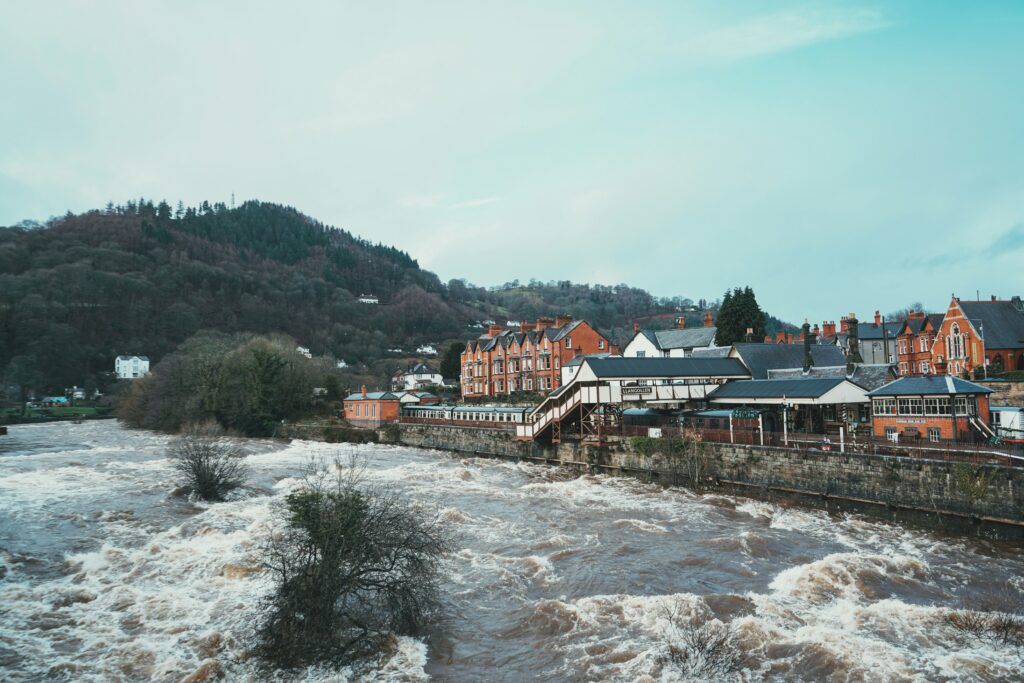
The Pontcysyllte Aqueduct, a UNESCO World Heritage Site carrying the canal 38 metres above the River Dee on 18 stone arches, is around ten to twelve miles away and worth seeing on foot as well as by boat.
Valle Crucis Abbey near Llangollen, the last Cistercian house built in Wales, with the 9th-century Eliseg’s Pillar beside it, and the hilltop castle of Castell Dinas Brân above the town, are all around twenty minutes.
Ruthin, around twenty minutes, has the oldest dated timber-framed town house in Wales, its old courthouse and a Georgian gaol you can walk through.
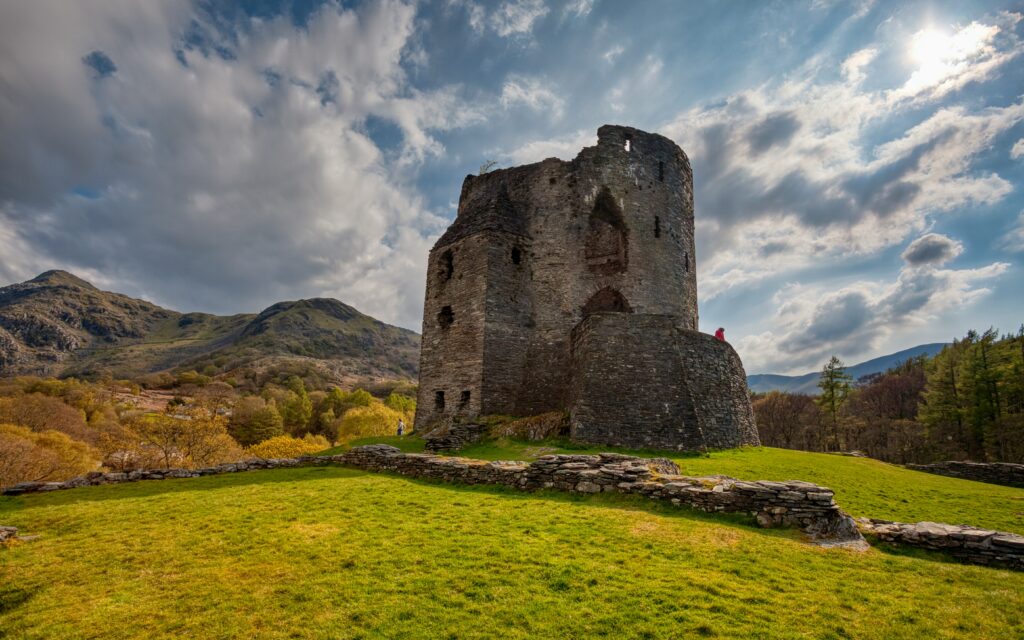
The Edwardian UNESCO castles at Conwy, Caernarfon, Beaumaris and Harlech are roughly one to one and a half hours by road, each a full day out.
Glyndŵr’s country
Corwen, around five miles away, is Owain Glyndŵr’s town. He proclaimed himself Prince of Wales in 1400 and held lands nearby, and his statue stands in the square below the Iron Age hillfort of Caer Drewyn, which is associated with him by tradition.
Close by are Rug Chapel, a rare little-altered 1637 chapel with a painted interior, and Llangar Old Church with its untouched medieval wall paintings, both on one Cadw ticket. The heritage Llangollen Railway now runs steam trains along the Dee Valley into Corwen itself.
On the doorstep
Derwen’s St Mary’s Church, a short walk from the cottages, has a finely carved medieval rood screen and surviving rood loft, one of only around a dozen left in Wales, and a 15th-century carved preaching cross in the churchyard.
Both cottages have a log burner and a proper kitchen, so a long day among castles ends somewhere quiet. The Llangollen International Eisteddfod, one of the world’s great cultural festivals, is around thirty minutes away every July.